Kentucky Lake is Waiting for You!

It’s a girl!

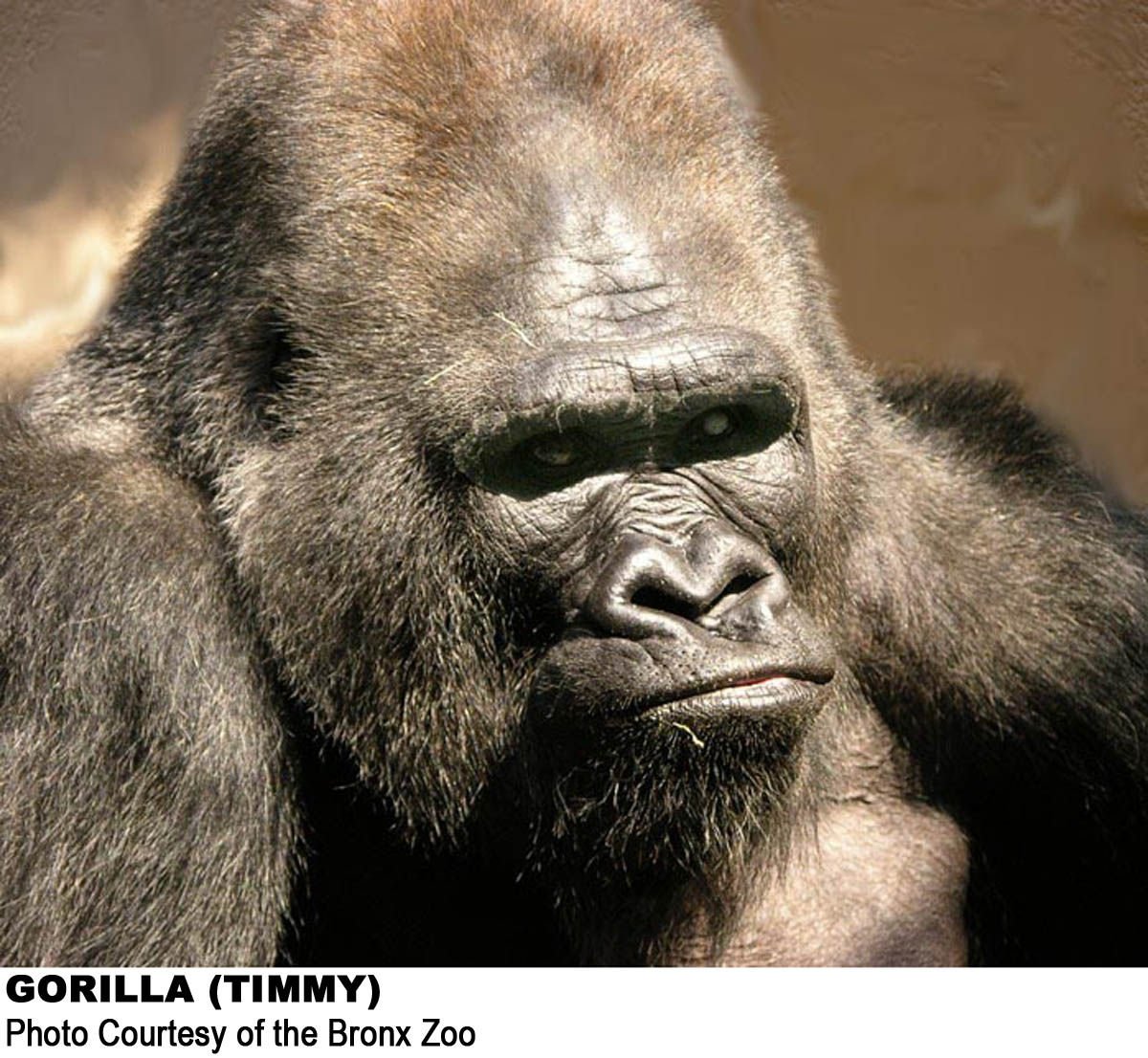
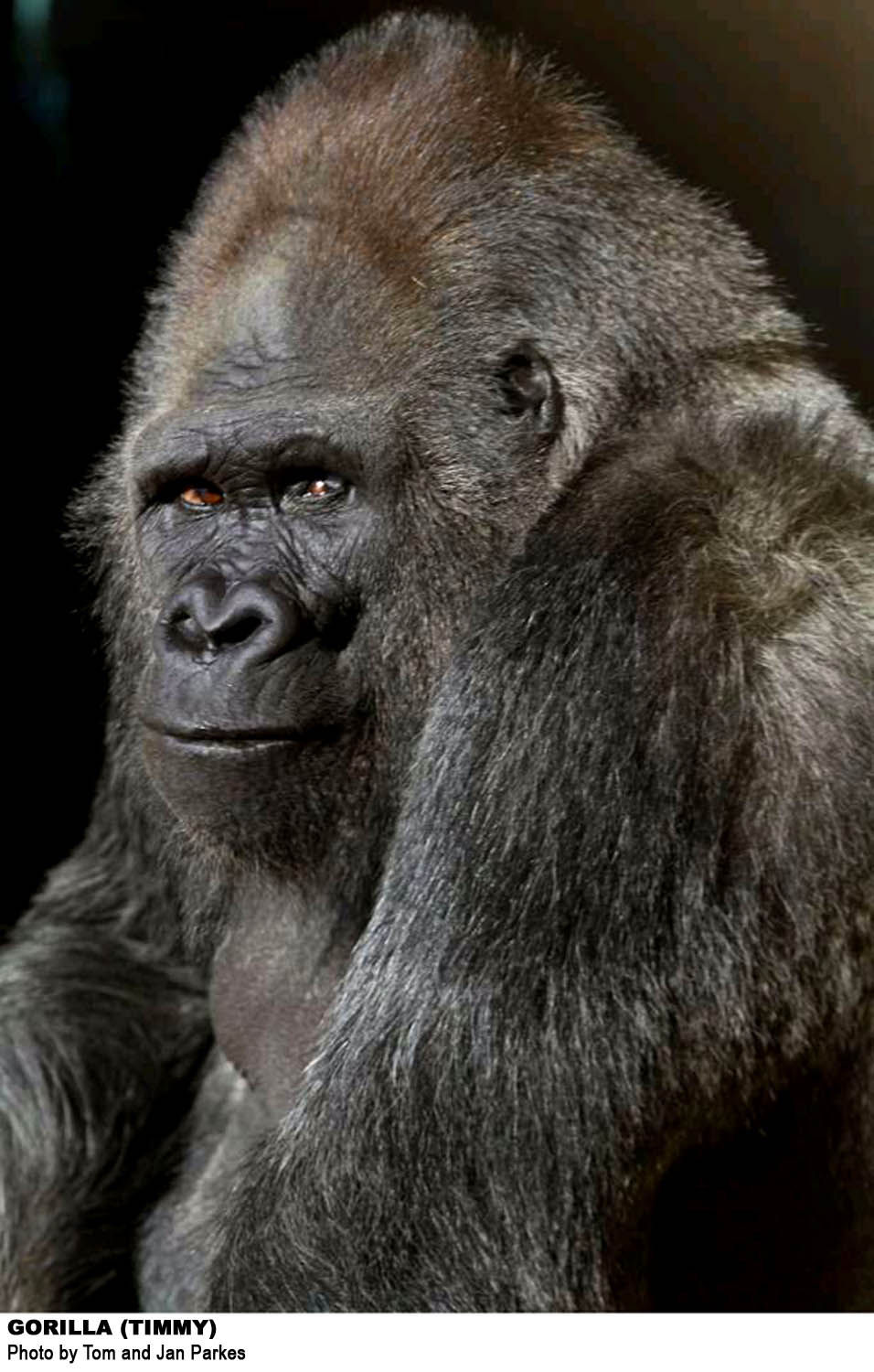
The first baby gorilla born in North America this year was at the Louisville Zoo.  The adorable bouncing baby is a girl.

She was born February 6, 2010, to Louisville Zoo’s 20-year-old western lowland gorilla Mia Moja. While the baby continues to cling tightly to mom nearly all the time, ZooKeepers have been able to get several close looks to determine and verify the baby is a girl.

A naming contest for the baby is being planned and I’ll post more about the contest when I get more information.

Below is an excerpt from the Louisville Zoo’s press release:

“I’m excited, either way—boy or girl,” Gorilla Forest Keeper Michelle Wise said. “On the night the baby was born, Mia Moja made a big fluffy nest out of hay and a soft, pink blanket and settled herself and the baby into it. I think maybe she was giving us a hint at the time with the pink blanket!”

This is the second gorilla ever born in the Zoo’s 41-year history. (The first was male Azizi born to Makari on December 4, 2003, a year after Gorilla Forest opened in May of 2002.) The father is 22-year-old silverback Mshindi. It is Mshindi’s first offspring and Mia Moja’s second. She proved herself a good mother with the birth and subsequent raising of Olympia, who was born in 1996 at Zoo Atlanta and still resides there.

Mia Moja and baby are continuing to bond and baby is staying awake longer, looking around and being very observant with her big, brown eyes.

Since there are only 354 western lowland gorillas in 52 zoos accredited by the Association of Zoos and Aquariums, each birth is a celebration of life and a step toward preserving the species.

“We hope the community will come and see the precious baby,” Louisville Zoo Director John Walczak said. “This remarkable baby girl is engaging and inspiring—a true ambassador for her relatives in the remnant wild. Because of her, we hope visitors will be motivated to learn more about conservation and preservation, which are at the core of our mission to better the bond between people and our planet.”

Western lowland gorillas are a critically endangered species and the wild population has declined rapidly over the past decade. According to the World Wildlife Fund, there are approximately 100,000 western lowland gorillas in the wild. However, there is no truly accurate census as these elusive apes inhabit some of Africa’s densest and most remote rainforests.

Mia Moja became pregnant as part of a recommendation from the Gorilla Species Survival Plan (SSP), a collaborative effort of North American zoos designed to encourage a healthy gorilla population in captivity and to ensure that the population remains viable, genetically-diverse and self-sustaining.

Female western lowland gorilla Kweli (pronounced “quay lee”) is also housed with the baby, Mia Moja and Mshindi. She arrived at the Louisville Zoo in 2008 from Cincinnati.

This birth brings the total gorilla population at the Louisville Zoo to 12. For more information on the Louisville Zoo’s gorillas in Gorilla Forest, visit www.louisvillezoo.org/collection/exhibits/gforest/gf-meet.htm.

Even during cold weather, visitors can view the gorillas inside Gorilla Forest’s comfortable, climate-controlled sanctuary. But note, in Gorilla Forest the animals rotate through the exhibit spaces on a daily basis so baby, mom Mia Moja, father Mshindi and Kweli will not always be visible.

Starting Monday, March 1, the Zoo will be operating on its spring and summer schedule. You will be able enter the Zoo daily from 10 a.m. to 5 p.m. (exit by 6 p.m.) For more information, visit www.louisvillezoo.org.

GORILLA BIRTH INFORMATION

* A gorilla’s gestation period is about 8-1/2 months
* Labor can range anywhere from 20 minutes to 2.5 hours
* Gorilla babies usually weigh at least 4 pounds and are about the size of human babies
* Nursing usually occurs in the first 24 hours
* The baby will begin eating solids at 2 months of age
* The mother may first put her baby down for extended times at 3 months of age
* The baby may begin weaning as early as 4 months of age
* A baby begins to crawl away from mom and starts exploring at 4-5 months of age

Mark your calendars: Pre-historic creatures are set to invade the Louisville Zoo in March 2010.

A new adventure will be stomping into the city of Louisville and heading straight for the Louisville Zoo in March. I’ve said it before and I’ll say it again, we’re very lucky here in Kentucky for a great number of reasons and one of them is the outstanding Louisville Zoo. There’s always something extra-special going on at this amazing zoo. Just check out what’s coming in a few months!

From the Louisville Zoo:
Precautions are being taken as the Zoo prepares Dinosaurs Alive!, a temporary dwelling for a herd of 16 robotic dinosaurs never before seen at the Zoo—including the giant Brachiosaurus, the menacing Tyrannosaurus rex, the fierce Deinonychus whose name means “Terrible Claw,” and the Cryolophosaurus which is often referred to as the “Elvisaurus” because the large crest atop its skull resembles the iconic hair of Elvis Presley.

Through the magic of incredible, futuristic technology, the mammoth, life-like animatronic creatures that roar, snarl and move will offer a full-blown dino-reality experience to visitors as they travel back in time along a lush, winding pathway where these enormous primeval creatures lurk at every turn. There, guests will encounter adult dinosaurs, youngsters and even a nest with eggs and hatchlings.

The robotic dinosaurs are built on steel frames by Billings Productions of McKinney, Texas, and high-tech electronics and air pistons power the dinosaurs’ menacing claws and gnashing teeth while a booming sound system gives them their distinctive roars and chirps. One of the animatronic creatures can even be operated by visitors using a remote control box.

In addition, kids can excavate dinosaur fossils at a paleontologist dig site using brushes and sifters to search for clues about the lives of dinosaurs.

“Guests of all ages will be transported back in time as the world’s largest and most advanced collection of high-tech, life-size animatronic dinosaurs come to life here in Louisville,” Zoo Director John Walczak said. “This Dinosaur exhibit will be a fun and educational learning adventure for the entire family. We’ve lost many animals from this planet over the course of history, and unfortunately animals are still becoming extinct today. Conservation and preservation are at the heart of the Zoo’s mission and it is our hope that visitors will come away from this exhibit both excited and more aware of the need to conserve animal species living today.”

In a revenue-sharing partnership with Billings Productions, Dinosaurs Alive!, is similar to other new attraction partnerships at the Zoo like Sky Trail High Adventure Course and the 4-D Ride Theater.

Dinosaurs Alive! will open mid to late March and will continue through the end of September. A special attraction fee of $5 applies for non-members in addition to regular Zoo admission and $4 for Louisville Zoo members. Children age 2 and under are free. Groups of 15 or more may call (502) 238-5348 in advance for group discounts.

Shopasaurus—a new gift shop at the exhibit’s exit—will be fully stocked with “dinorrific” toys, games and souvenirs to help visitors take home a reminder of their amazing experience.

***

The Louisville Zoo, a non-profit organization and state zoo of Kentucky, is dedicated to bettering the bond between people and our planet by providing excellent care for animals, a great experience for visitors, and leadership in scientific research and conservation education. The Zoo is accredited by the American Association of Museums (AAM) and by the Association of Zoos and Aquariums (AZA).

*** Get up-to-date information about the Zoo’s upcoming Glacier Run exhibit by checking out our new Glacier Run blog. You can also show your love for the Louisville Zoo by becoming a fan on Facebook.

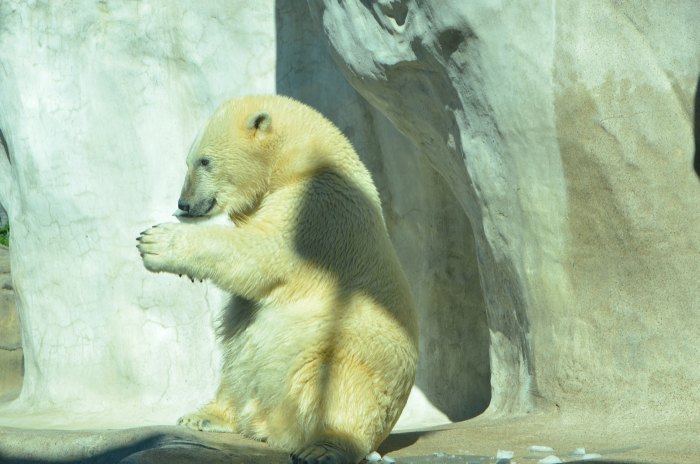
Polar Bear Family

We’re lucky in Kentucky for many reasons – John Calipari, Rick Pitino, the weather, seasons, scenery, friendly people, beautiful birds, lakes, and wildlife are hard to beat. We also have a great number of fun things to do and great places to eat. Did I mention Calipari and Pitino, yet?

Those of us who are extreme animal lovers also love the fact that Louisville, Kentucky is home to one of the most remarkable zoos in the country. I’m especially excited right now, because I have a thing for arctic animals. (You should see our computer room – polar bears, arctic foxes and white seals everywhere.) So I’ve been anxiously watching as the Louisville Zoo has been working on their Glacier Run project. I learned some really incredible news this morning – The Louisville Zoo received an additional $2 million for the Glacier Run project from the J. Graham Brown Foundation.

Glacier Run is going to be BEYOND magnificent. The Seal and sea lion section is set to open in 2010 and the much anticipated polar bears will be ready for me (oh, and you, of course) in 2011.

I can’t even tell you how excited I am!

“James Graham Brown was the first, original contributor to help fund a Zoo in Louisville, and the foundation that bears his name has been a longtime supporter. We are excited that the Foundation continues to invest in the Zoo’s programming and exhibits,” Louisville Zoo Director John Walczak said. “The James Graham Brown Foundation has once again acknowledged the Zoo’s value to the community and Commonwealth and the important role the Zoo plays in educating our youth.”

With this gift, the Zoo has raised more than $20.2 million for the Glacier Run project, the most money ever raised for a new exhibit in the Zoo’s 40 year history.

In September 2008, the Zoo broke ground on the Glacier Run Village, the “heart” of Glacier Run, which will feature pinnipeds (seals and sea lions) and polar bears.

The pinniped portion of the exhibit is scheduled to open in the spring of 2010 and the much-awaited polar bear portion is scheduled for 2011. The other originally planned components of the project, including Steller’s sea eagles, sea otters and the Glacier Run animal outreach center, will be added soon after the main area is complete.

Another $8.9 million is still needed to complete all portions of project as well as provide an endowment to ensure its legacy.

“From the beginning, this exhibit was created to be ‘phasable,’” Walczak said, “and the two strategic openings of pinnipeds in 2010 and polar bears in 2011 will continue to support our business plan which hinges on opening a new Zoo element each year to keep visitors engaged and attendance growing.

“The Louisville Zoo is known for its award-winning, innovative exhibits and Glacier Run will continue that tradition. Not only will it communicate one of the most relevant conservation issues of our time, global climate change, it will also be the high quality, exciting experience that our visitors and community have come to expect. It will fundamentally advance the Zoo’s mission of ‘bettering the bond between people and our planet’ through education, recreation and quality family fun.

“We have every confidence in this project and are continually seeking new funding sources from every feasible avenue. Our Glacier Run Steering Committee is energized to see this project through to its completion. We have been successful thus far in pursuing opportunities to get funding for this project, and we will continue to be responsible stewards of that investment.”

Once Glacier Run is totally complete, the estimated economic impact of the Zoo on the region will increase to $33.6 million while adding more than 400 new jobs to the local economy.

“The Zoo and Glacier Run are part of the solution to strengthen the economy of our community,” Walczak said. “We exist for the citizens of Louisville and the Commonwealth and are committed to do our part to help the community and state. The Zoo is a place dedicated to providing excellent care for animals, a great experience for visitors and leadership in scientific research and conservation education. It is also a place where families can escape and not have to worry about their day-to-day problems. In this economy, we provide a quiet respite and quality family fun at an excellent value.”

GLACIER RUN OVERVIEW

Glacier Run will not only tell the dramatic story of the polar bear, one of the most charismatic species on the planet becoming more threatened every day, it will also engage visitors of all ages and educate them about the most pressing environmental challenges of our time. Glacier Run will inspire visitors to actively participate in the Zoo’s mission of bettering the bond between people and our planet.

Glacier Run will be a truly unique experience where one can visit the animals, talk to the keepers about conservation and become temporarily immersed in life on the tundra. The exhibit will recreate the natural habitat for some of the Zoo’s most popular residents including polar bears, seals and sea lions. The addition of sea otters and bird species like the Steller’s sea eagles will add to the feeling of being surrounded by wildlife. The town of Glacier Run will include a schoolhouse and general store. A spacious amphitheatre will make viewing the seal and sea lion enrichment demonstrations more enjoyable.

The first three phases of Glacier Run have already opened. They include the Australian Walkabout, Calistoga Splash Park at Glacier Run and Alice S. Etscorn Tiger Tundra exhibit.

For more information on Zoo’s upcoming Glacier Run exhibit, visit http://www.louisvillezoo.org/glacierrun/.

Can’t wait!